 ENGLISH
 中文
中文 ไทย
ไทยGood-Quality Embryos But No Implantation? Implantation-Window Issues in PCOS
Transferring good-quality embryos does not guarantee implantation success, especially for patients with PCOS. Even when embryo quality is normal, shifts to your window of implantation (WOI) driven by hyperandrogenism, inflammation, and metabolic issues can stop pregnancy from taking hold.
A landmark 2026 Nature Communications study confirmed: after accounting for embryo quality, PCOS patients still show poorer implantation and live-birth outcomes. We explain PCOS-linked endometrial receptivity defects and what you can discuss with your reproductive endocrinologist.
What Is the “Window of Implantation”?
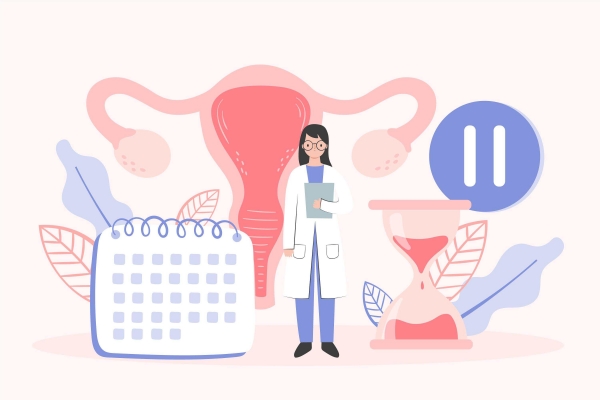
The endometrium is not continuously ready to receive an embryo. Within each menstrual cycle, there is a defined receptive “open window,” generally on cycle days 20-24 or on days 6-10 post-ovulation. This is known as the window of implantation (WOI).
During this period, the endometrium supports embryo attachment and invasion. If the window shifts earlier or later, implantation may fail even with good-quality embryos.
In PCOS patients, this window frequently becomes dysregulated.
Hyperandrogenism alters the expression of core endometrial-receptivity genes, while inflammation and metabolic abnormalities further impair uterine readiness for conception.
Together, these biological changes make recurrent implantation failure a frustrating reality for many PCOS patients, even when embryos look morphologically normal.
How Does PCOS Disrupt the Implantation Window?
In 2026, multiple studies uncovered the molecular mechanisms behind impaired endometrial receptivity in PCOS.
After strict adjustment for embryo quality and confounding clinical variables, research confirms PCOS-related endometrial dysfunction exists independent of ovarian pathology.
Three major biological pathways have been identified:
Mechanism 1: Disrupted oestrogen signalling damages endometrial receptivity
Researchers from Peking University Third Hospital found that the secretory-phase endometrium in PCOS patients has abnormally high estrogen-receptor alpha (ERα) together with elevated histone lactylation.
Together they form a vicious cycle that disrupts estrogen-progesterone balance and prevents the endometrium from becoming receptive at the right time.
To put it simply: think of estrogen receptors as “antennas” on endometrial cells that receive hormone signals. In PCOS, these antennas are over-active.
Histone lactylation, a lactate‑related gene change, makes this problem even worse. As a result, the endometrium cannot respond normally to progesterone, and the implantation window fails to open properly.
Animal-model studies show that lowering ERα or histone lactylation can improve uterine receptivity in mice with PCOS-like changes, but these findings have not yet translated into clinical therapies for people.
Important caveat: These mechanistic observations come from pre-clinical mouse-model research. There are no approved drug treatments targeting these pathways for human IVF patients at this time.
Mechanism 2: Suppressed endometrial immune-signalling pathways
In February 2026, Professor Li Rong’s group at Peking University Third Hospital published findings in Advanced Science describing a second critical pathway.
Studies show the endometrium in PCOS patients has lower levels of the immune molecule interleukin-22 (IL-22).
Low IL-22 dampens the critical STAT3 signalling cascade, which the uterus needs to get ready for embryo implantation. Insulin-like growth factor binding protein 5 (IGFBP5) acts as a key downstream mediator in this process.
Simplified: IL-22 acts like an important preparatory signal for your endometrium. Without it, the whole sequence for implantation cannot run smoothly, lowering the uterus’s ability to accept an embryo.
Important caveat: Findings are based on pre-clinical mouse models. In mouse models, supplementing IL-22 or IGFBP5 improved endometrial receptivity, but this has not become clinical treatment for patients.
Mechanism 3: Hyperandrogenism shifts the implantation-window timing
A February 2026 paper in Molecular and Cellular Endocrinology explored how elevated androgens disturb endometrial function in PCOS.
High androgen levels interfere with the expression of two master regulatory genes, HOXA10 and HOXA11, required for establishing receptive endometrium during the WOI.
Specifically, hyperandrogenaemia blocks normal mid-luteal down-regulation of Podocalyxin (PCX) and prevents the expected up-regulation of HOXA10 / HOXA11. The result is reduced endometrial receptivity and a displaced implantation window.
To put it plainly: High androgen levels may open the WOI too early, open too late, or never open at all. By the time the embryo arrives, the endometrium is not biologically prepared, and implantation fails.
What These Research Findings Mean For You
If you have experienced good-quality embryos yet failed implantation:
Endometrial dysfunction acts as an independent risk factor. Do not automatically attribute negative outcomes solely to the embryo.
The Peking University Third Hospital cohort confirms that PCOS patients demonstrate statistically lower implantation, clinical-pregnancy, and live-birth rates compared to non-PCOS patients, even after controlling for embryo quality.
You may wish to discuss endometrial-receptivity testing (ERT / ERA) with your fertility specialist. These assays analyse endometrial-gene profiles to map personalised implantation-window timing.
Note: Global clinical guidelines remain mixed regarding routine ERA/ERT use for all patients. Testing suitability should always be assessed on an individual-patient basis.
If you are preparing for frozen-embryo transfer:
Talk with your clinician about whether your endometrial-preparation protocol accounts for PCOS-specific biological features.
A 2026 retrospective cohort found no statistically significant live-birth-rate differences across different endometrial-preparation regimens, supporting individualised protocol selection.
Meanwhile, optimising insulin-resistance status and maintaining healthy body weight are also meaningful steps, since metabolic parameters directly influence endometrial receptivity.
The Bottom Line
PCOS impacts fertility far beyond ovulatory dysfunction. 2026 research confirms that endometrial dysfunction represents an ovarian-independent driver of infertility in PCOS.
Recognising this broader biological picture helps frame your full IVF journey, rather than placing all expectation or disappointment purely on embryo quality metrics.
Have questions about personalised IVF planning for PCOS, including endometrial-receptivity evaluation? Connect with the CEF fertility team. Email info@cefivf.com or visit our Contact page.
Disclaimer: This educational article summarises peer-reviewed 2026 studies published in Nature Communications, Advanced Science, Molecular and Cellular Endocrinology, and other reproductive-medicine journals.
This content is not personalised medical advice. All fertility-treatment decisions should be discussed with a licensed reproductive-endocrinology specialist.