
 ENGLISH
 中文
中文 ไทย
ไทย10 Signs of Male Infertility Every Couple Should Know
Signs of male infertility are often overlooked by couples trying unsuccessfully to conceive for months. This guide covers 10 common signs including silent, easy-to-miss male fertility red flags, plus clear advice on what fertility tests you’ll undergo.
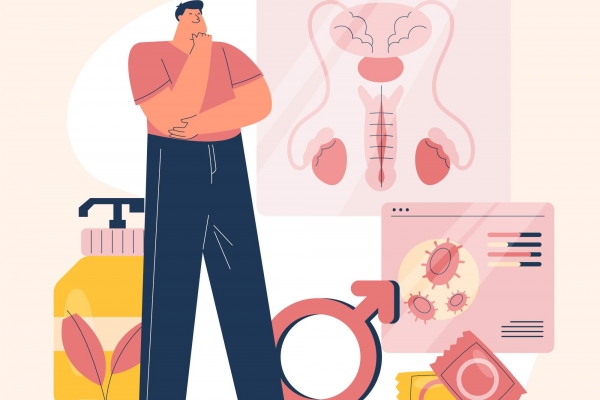
What Is Male Infertility?
Infertility affects nearly 1 in 7 couples worldwide (From Mayo Clinic), which means they haven't been able to conceive a child even though they've had frequent, unprotected sexual intercourse for a year or longer.
In up to half of these couples, male infertility plays at least a partial role. Male infertility can be caused by low sperm production, abnormal sperm function, or blockages that prevent the delivery of sperm.
The main sign of male infertility is the inability to conceive a child, and this is difficult to define directly. This is precisely why understanding the subtle and not-so-subtle signs of male infertility is so important, even if everything feels completely normal.
The 5 Most Common Physical Signs of Male Infertility
Signs 1: Changes in Testicle
Men’s testicles are where sperm production happens, so any noticeable change in their size, shape, or firmness is worth paying attention to. This is often one of the most visible signs of male infertility that a man can detect on his own.
What to look for:
1. One or both testicles feel smaller than a golf ball.
2. Soft or spongy texture instead of firm. Smaller or softer testicles often indicate low testosterone or testicular failure.
3. A visible lump or irregular shape. A lump could be a varicocele (enlarged vein) or, more rarely, testicular cancer. Varicoceles are the most common reversible cause of male infertility.
Action tip: If you notice a lump, see a doctor immediately; not all lumps are cancer, but all require proper evaluation.
Signs 2: Erectile Dysfunction or Ejaculation Issues
Many men don’t realize that sexual function and fertility are closely connected. Problems with erections, ejaculation, or libido aren't just about performance; they can be early warning signs of hormonal or physical issues affecting sperm production.
What to look for:
1. Difficulty getting or maintaining an erection. Erectile dysfunction is often a hormonal red flag pointing to low testosterone or high prolactin levels.
2. Reduced sexual desire (low libido) compared to previous years.
3. Painful ejaculation or very low semen volume.
4. Retrograde ejaculation (where semen flows backward into the bladder instead of outward) can result in zero sperm in the ejaculate.
Action tip: These aren't just “performance” issue; they're medical signals. Don't ignore them out of embarrassment.
Signs 3: Persistent Testicular Pain
Pain in the testicle area is never normal, and it can range from a mild, persistent ache to sudden, sharp discomfort. Understanding what type of pain you’re experiencing can help you and your doctor figure out the underlying cause.
What to look for:
1. Dull, heavy ache in the scrotum, worse after standing or at the end of the day. A dull ache often points to a varicocele, swollen veins that drain the testicle, which can lower sperm count and quality.
2. Sudden, sharp pain with visible swelling. Sudden sharp pain may indicate an infection (epididymitis) or testicular torsion, which is a medical emergency.
3. Pain that comes and goes without any obvious cause.
Action tip: Sudden severe pain means go to the ER immediately. Don't wait it out.
Signs 4: Breast Enlargement or Tenderness
It may seem unrelated, but breast tissue changes in men are a direct reflection of hormone balance. If you notice tenderness or swelling around your chest, it could signal that your estrogen and testosterone levels are out of sync, and that can affect sperm production.
What to look for:
1. Visible growth of breast tissue on one or both sides. This is a clear sign of hormonal imbalance, specifically high estrogen relative to low testosterone.
2. Tenderness or pain around the nipple area.
Action tip: If you notice chest growth or tenderness, mention it to your doctor; it's not just a cosmetic concern. It might be related to Gynecomastia.
Signs 5: Reduced Facial or Body Hair Growth
Hair growth patterns are driven by hormones called androgens. When those levels drop, you might notice your beard is becoming patchy, and that same hormone drop could be affecting your sperm count.
What to look for:
1. Shaving noticeably less often than before.
2. Patchy beard growth or thinning body hair. Facial and body hair are driven by androgens (male hormones). Reduced hair growth can signal androgen deficiency, which impairs sperm production.
3. Delayed puberty in younger men.
Action tip: Go to the hospital as soon as possible to check for hormonal health when the hair on your body is significantly sparse.
The 5 No-Symptom Signs: What Most Men Don't Realize
Up to 30-40% of men with infertility have no obvious symptoms other than the inability to conceive. In most cases, intercourse, erections, and ejaculation happen without difficulty, and the semen appears normal to the naked eye.
Read this section carefully to get no-symptom signs of male infertility, even if everything looks and feels normal.
Signs 6: Trying for 12 Months with No Success
This is the most overlooked sign of male infertility because it doesn’t feel like a “sign” at all. But the truth is, time is a diagnostic tool. If you’ve been actively trying without success for a year, your body is already giving you the most important signal to get checked.
What to look for:
1. No pregnancy despite regular, unprotected sex for over 12 months (or 6 months if the female partner is over 35). This is one of the top silent sign of male infertility. Many men wait 2-3 years before seeking help. Time is your biggest enemy in infertility; don't waste it.
2. No other issues. Menstrual cycles are regular, timing is right
Action tip: If you hit the 12-month mark, do not wait another year; schedule a semen analysis. It's cheap, quick, and non-invasive.
Signs 7: Childhood Surgeries That May Affect Fertility
Some childhood surgeries can affect your fertility as an adult. Two of the most important ones to remember are undescended testicles repair and hernia repair.
Many men don’t think to mention these to their doctor because they happened so long ago, but they are valuable clues for understanding your reproductive health.
What to look for:
1. You were born with undescended testicles (even if surgically corrected).
Undescended testicle means one or both testicles fail to descend into the scrotum before birth, raising male infertility risk as higher groin temperatures disrupt sperm production. Even with childhood corrective surgery, those with a history face poorer sperm quantity and quality, especially if both testicles were undescended.
2. You had inguinal hernia surgery as a child. Inguinal hernia repair carries a tiny ~0.3% risk of damage to the sperm-carrying vas deferens.
Action tip: Write these down before your first urology visit. Doctors can't ask about what you don't remember.
Signs 8: Current or Past Use of Certain Medications
Some medications that seem completely unrelated to reproduction can actually shut down sperm production or cause permanent damage, so it's crucial to review your full medication history.
What to look for:
1. Testosterone replacement therapy (TRT), including some gels, injections, or patches. External testosterone shuts down natural sperm production completely.
2. Anabolic steroids, such as muscle-building supplements. Even over-the-counter muscle supplements can affect sperm.
3. Chemotherapy or radiation therapy history. Chemotherapy can cause permanent or temporary sterility.
4. Antidepressants (SSRIs) or blood pressure medications.
Action tip: Bring a complete medication list to your appointment, including supplements.
Signs 9: Regular Exposure to High Heat Environments
Sperm are sensitive to temperature. Sperm production requires a temperature 2-3°C below normal body temperature. Chronic heat exposure lowers sperm count and motility significantly.
If your daily routine or job regularly exposes your groin area to heat, it could be quietly affecting your sperm count without a single symptom.
What to look for:
1. Occupation: Chef, truck driver, baker, firefighter (high heat, prolonged sitting).
2. Hobbies: Frequent sauna, hot tub, or steam room use.
3. Daily habits: Laptop on lap for hours, tight underwear (briefs vs. boxers).
Action tip: Switch to loose-fitting boxers, take cooling breaks at work, and avoid saunas for 3-6 months if you're trying to conceive.
Signs 10: Family History of Genetic or Reproductive Disorders
Your family's medical history is a window into your own health, including your fertility. If your father, brother, or other relatives have struggled with infertility or genetic conditions, it could mean you're at higher risk too.
What to look for:
1. Brother or father with infertility or low sperm count.
2. Family history of cystic fibrosis, hemochromatosis, or Klinefelter syndrome. Genetic conditions are inherited and affect sperm quality.
3. Some genetic mutations, like Y-chromosome microdeletions, cause severe infertility.
4. Unexplained miscarriages in your family (male genetic factors can contribute)
Action tip: If you have a family history, tell your doctor. Genetic testing may be recommended.
Male Infertility vs Female Infertility: How to Know Which Side?
One of the most persistent myths about infertility is that “it's primarily a woman’s problem.”
Current medical evidence shows that male factors contribute to 40-50% of all infertility cases, meaning it's equally likely to be on either side. This is why experts increasingly recommend that couples approach infertility testing as a shared process.
And there's a practical reality that many couples overlook: testing the male partner is significantly easier, faster, and less expensive than testing the female partner.
Semen analysis is quick, non-invasive, and far cheaper than female fertility assessments, which often involve bloodwork, ultrasounds, and invasive imaging that cost more and cause greater discomfort.
Given this stark difference, the smartest strategy is to have both partners tested simultaneously from the start.
Undergo testing together from the start to save time, avoid redundant procedures and fully evaluate fertility. Prior successful pregnancies do not rule out current fertility issues, as age and health can alter reproductive function over time.
If you've already explored the what are signs of female infertility and are still not pregnant, now is the time to shift focus to your male partner.
When to See a Doctor and What Tests to Expect
Recognizing these signs is a crucial first step, but the real power comes from taking action. Here walks you through the exact timeline for booking the standard tests when you get to the clinic.
When to book an appointment
|
Time |
Symptoms |
|
Immediately |
If you have sudden testicular pain, swelling, or a lump |
|
Within 1 month |
If you have any physical signs listed above (size changes, ED, reduced hair growth) |
|
At the 12-month mark |
If you've been trying with no success (even with no symptoms at all) |
|
At 6 months |
If your partner is over 35 |
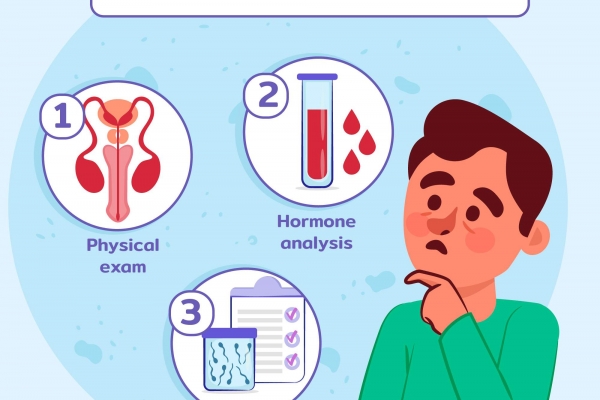
What to expect at your first visit
|
Step |
Test |
What It Checks |
|
Medical History & Physical Exam |
Doctor asks about surgeries, medications, childhood conditions |
|
|
Semen Analysis (Gold Standard) |
Provide a semen sample |
Sperm count (≥16 million/mL), motility (≥42%), |
|
Hormone Blood Test |
Blood draw for Testosterone, FSH, LH |
|
|
Scrotal Ultrasound |
Non-invasive imaging of the scrotum |
Checks for varicocele, blockages, or tumors |
Note: A normal sperm count is at least 15 million sperm per milliliter of semen. If your count is lower than this, further investigation is needed.
Action tip: Don't be nervous; most of these tests are non-invasive. A semen analysis takes 15 minutes.
Conclusion
Signs of male infertility are usually unnoticeable, yet recognizing potential risks lets you take charge of your fertility.
If you and your partner have tried conceiving for 12 months, a semen analysis is the straightforward first step. Male fertility testing is fast, low-cost, and non-invasive, with numerous effective treatments, and countless diagnosed men go on to have children.
You do not need to struggle alone or delay care; arrange testing jointly with your partner for clear answers.
FAQs
1. Can a man be infertile and still have a normal sperm count?
Yes. A normal sperm count does not guarantee fertility; poor motility, abnormal sperm shape, or DNA damage can all cause infertility, all measured in a full semen analysis.
2. Does age affect male fertility?
Yes. Sperm quality and genetic stability drop noticeably from age 40 onward. Unlike women, men retain lifelong fertility potential, but testing is still highly recommended after six months of failed conception.
3. What does male infertility pain feel like?
It depends on the cause. Varicocele causes a dull, heavy scrotal ache that grows worse after long periods of standing. Reproductive infections trigger sharp pain and swelling, sometimes paired with fever. Sudden, excruciating pain signals testicular torsion, a critical medical emergency requiring immediate emergency room care.