
 ENGLISH
 中文
中文 ไทย
ไทยCan Birth Control Make You Infertile? How Long Till Fertility Returns & Truths
Can birth control make you infertile? Medical data prove birth control does not lead to permanent infertility. Clear evidence-based answers on how long fertility takes to return after stopping contraception and common causes of delayed conception.
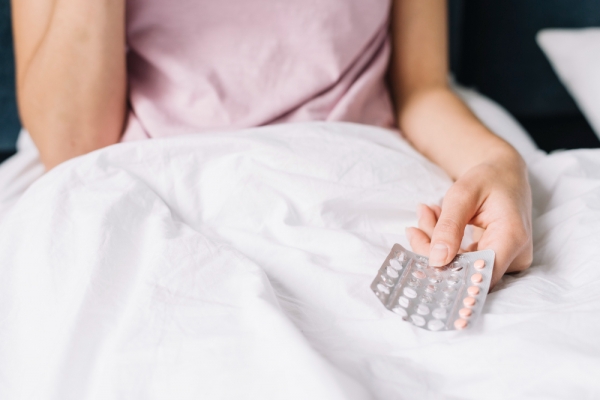
Can Birth Control Make You Infertile? The Short Answer
Can birth control make you infertile? The short answer is no; birth control does not cause infertility.
You may have feared that your previous history of contraception (birth control pills or shot) could permanently affected your chances of getting pregnant. That fear is real, and you are not alone in feeling it.
Here is the truth you came here for: No, reversible birth control does not cause permanent infertility. The American College of Obstetricians and Gynecologists (ACOG) confirms that birth control is safe and effective, and there is no evidence that long-term use negatively impacts your ability to conceive in the future.
Reversible contraceptives work by temporarily preventing ovulation, thickening cervical mucus, and altering the uterine lining to stop pregnancy. These effects are pharmacological, and when the hormones are stopped, or the device is removed, a woman's normal hormonal cycle returns.
In fact, more than 80% of women become pregnant within one year after stopping the pill. The question is not if it will return, but when, and that depends on the method you used.
How Long After Birth Control to Get Pregnant? (By Method)
How long after birth control to get pregnant? The timeline varies significantly depending on the method you used. Here is what the research shows.
|
Form of birth control |
Time to pregnancy after stopping birth control |
|
Oral birth control pills |
3 months |
|
Skin patch |
4 months |
|
Skin implant |
2 months |
|
Injectable birth control |
6–8 months |
|
Copper or hormone-releasing IUDs |
Within 12 months |
Combination Pills, Patches, and Rings
These methods contain both estrogen and progestin. Most women resume ovulating within one to three months after stopping the pill. About half of women get pregnant in the first three months after stopping, and most women get pregnant within 12 months.
PLOS ONE study found that the unadjusted 12-month probability of pregnancy for women discontinuing the pill ranged from 75% to 81%. Fertility can return as soon as your next cycle.
The Progestin-Only Pills (mini-pill) does not seem to delay fertility. Most women will get pregnant within six months after stopping. You can get pregnant almost right away after you stop taking it.
Birth Control Implant
With the implant, fertility returns immediately, and you can get pregnant as soon as it is removed. The pregnancy rate (76% to 100% within one year after removal) is usually not significantly different from the level after discontinuing any other contraceptive method.
The average time to pregnancy is approximately 2 months.
Birth Control Shot Fertility Return
This is the method that takes the longest. The birth control shot fertility return timeline is different from other methods because the birth control shot (Depo-Provera) suppresses ovulation for an extended period.
Studies show the median time to ovulation for Depo-Provera is approximately 183 to 212 days (about 6 to 7 months). It may take 3 to 18 months after your last shot to get pregnant.
However, and this is important, over 90% of women regain their fertility within 24 months of their last injection. The delay is significant, but it is not permanent.
Intrauterine Devices (IUDs)
For both copper and hormonal IUDs, fertility usually returns with the first menstrual cycle following removal. Most women get pregnant within the first year after having the IUD removed.
PubMed indicates that the pregnancy rate within 12 months after the removal of an IUD is approximately 81%. The PLOS ONE study further reveals that the pregnancy rate one year after discontinuation of the IUD ranges from 72% to 85%.
Signs of Infertility in Women After Stopping Birth Control
Medical guidelines define infertility as being unable to conceive after 12 months of regular unprotected sex, or six months for women aged 35 and above. This formal clinical condition cannot be triggered by birth control itself.
If you are wondering about signs of infertility in women after stopping birth control, here is what to watch for.
Symptoms that May Need Medical Attention
Some symptoms may indicate an underlying issue that needs medical attention:
1. Irregular or absent periods for months after stopping birth control; this may signal an ovulation problem.
2. Severe menstrual pain; that disrupts your daily life.
3. Hormonal imbalance symptoms such as persistent acne, excessive hair growth, or sudden weight changes.
4. Difficulty getting pregnant after 12 months of trying (or 6 months if you are 35 or older).
5. Other signs can include spotting between periods, unusually heavy or light bleeding, or cycles that are significantly longer or shorter than normal.
However, here is an important reality check: experiencing some of these symptoms does not mean you are infertile.
Your body needs time to adjust after stopping hormonal contraception. It can take up to three months for your cycle to regulate. If you are concerned, the best step is to book a consultation with a healthcare provider for proper evaluation.
If you are under 35 and have been trying for 12 months without success, or over 35 and trying for 6 months, it is time to seek medical advice.
How to Know If You're Infertile: Diagnosis & Next Steps
How to know if you're infertile is a question many people ask, but here is the truth: you cannot know on your own. Infertility is a clinical diagnosis, not a feeling or a guess.
The World Health Organization (WHO) defines infertility as the failure to achieve a pregnancy after 12 months or more of regular unprotected sexual intercourse.
If you meet this criteria, your doctor will likely recommend:
|
Fertility Test |
What It Measures |
Why It Matters |
|
Ovulation testing |
Confirms whether ovulation is occurring using urinary LH kits or blood progesterone tests |
If you are not ovulating, you cannot conceive; this is the first thing to rule out |
|
Ovarian reserve testing (AMH) |
Measures anti-Müllerian hormone (AMH) levels in your blood to estimate your remaining egg supply |
Low AMH suggests diminished ovarian reserve, which can make conception more difficult |
|
Pelvic ultrasound |
Visualizes the ovaries, uterus, and endometrial lining using sound waves |
Identifies structural issues like fibroids, ovarian cysts, or PCOS-related changes |
|
Hysterosalpingogram (HSG) |
An X-ray procedure that uses contrast dye to check whether your fallopian tubes are open |
Blocked tubes prevent sperm from meeting the egg—this is a common cause of unexplained infertility |
|
Laparoscopy |
A minor surgical procedure that inserts a camera into the pelvis to inspect reproductive organs |
Can diagnose endometriosis, adhesions, or scarring that imaging tests often miss |
Remember: difficulty conceiving after stopping birth control is more likely related to age or preexisting conditions than to the birth control itself.
Diseases That Cause Infertility in Females
So, does birth control cause infertility? No, birth control does not cause infertility. It can, however, hide pre-existing hormonal or ovarian issues while you are using it.
While birth control does not cause infertility, certain medical conditions absolutely do. Understanding these can help you separate myth from reality.
Does PCOS Cause Infertility?
Does PCOS cause infertility? Yes, PCOS (now named PMOS, Polyendocrine Metabolic Ovarian Syndrome ) is one of the most common causes of infertility in women.
PCOS affects up to 1 in 10 women of childbearing age. It is a hormonal imbalance that disrupts ovulation, leading to irregular menstrual cycles and difficulty conceiving.
The good news is that many women with PCOS conceive with proper medical management, including lifestyle changes and ovulation-inducing medications.
Can Endometriosis Cause Infertility?
Can endometriosis cause infertility? Absolutely. Endometriosis affects approximately 10% to 15% of reproductive-aged women, and its prevalence increases to nearly 50% among infertile women.
Among women with endometriosis, an estimated 30% to 50% experience infertility.
Endometriosis reduces fertility through several mechanisms: adhesions and scarring that distort pelvic anatomy, inflammation that affects egg quality, and damage to ovarian function.
Can an Ovary Cyst Cause Infertility?
Can an ovary cyst cause infertility? The answer depends entirely on the type of cyst.
1. Functional cysts are the most common type. They form during a regular menstrual cycle, and they do not cause or play a part in infertility. In fact, getting functional cysts means the key functions leading to fertility are taking place.
2. Endometriomas, cysts caused by endometriosis, can be linked with trouble becoming pregnant.
3. PCOS-related cysts are a symptom of the underlying hormonal disorder, not the direct cause of infertility.
4. Cystadenomas and dermoid cysts generally do not affect fertility.
If you have an ovarian cyst and are concerned about fertility, talk to your healthcare provider. They can tell you about treatment options that may boost your chances of pregnancy.
Ovulation and Menstrual Cycle After Stopping Birth Control: What to Expect
When you stop birth control, your body needs time to remember how to do things on its own.
Ovulation after stopping birth control typically resumes within one to two months for most women.
One study found that about half of participants ovulated within the first three weeks, and over 80% ovulated within the first six weeks after stopping the pill. Close to 95% of users had their ovulation return within the first six months.
Your menstrual cycle regulation after birth control follows a similar timeline. Your period usually returns within 2 to 8 weeks after stopping. The first few cycles may be irregular; this is normal and temporary.
What signs should you look for?
1. Ovulation pain (mittelschmerz): a mild ache on one side of your lower abdomen.
2. Changes in cervical mucus: it becomes clear, slippery, and egg-white-like around ovulation.
3. Basal body temperature shifts: a slight rise after ovulation.
If your periods do not return within three months, or if they remain highly irregular, it is worth checking in with a doctor.
Remember: birth control does not damage your natural cycle; it simply suppresses it temporarily.
Conclusion
Can birth control make you infertile? The clear answer is no. Reversible contraception does not trigger permanent infertility, and most women regain fertility within a year after stopping use, with slightly longer recovery only for birth control shots.
Trouble conceiving usually comes from age, PCOS, endometriosis, or tubal issues rather than contraceptives. Seek fertility checks after 12 months of trying, or six months if you are over 35.
Do not avoid birth control over fertility fears; it is safe and fully reversible. If you have concerns, talk to your doctor for personalized guidance.
FAQs
1. Can long-term use of birth control pills cause infertility?
No. Research has consistently shown that long-term use of birth control pills does not lead to permanent infertility. Even after 10 or more years of use, your fertility is expected to return to normal once you stop.
If you struggle to conceive after stopping, the more likely culprits are age or underlying conditions that were masked by the pill, not the pill itself.
2. How do hormonal contraceptives affect fertility in the long run?
Hormonal contraceptives’ fertility effects are fully reversible. Hormonal contraceptives work by suppressing ovulation; they do not damage eggs or reproductive organs.
Once the hormones clear your system, your hypothalamic-pituitary-ovarian axis resumes normal function. Studies have confirmed that AMH levels recover within three to six months after stopping the pill.
3. At what age should I be more concerned about fertility after stopping birth control?
Over 30 years old. Women’s fertility gradually declines starting at age 32 and drops sharply after age 37, due to natural reductions in egg quantity and quality over time.
Fertility stays optimal for women 32 and younger, requires careful planning in the mid-30s, and calls for immediate medical attention for anyone 37 or older struggling to conceive after stopping birth control.