
Age Limit for IVF with Own Eggs: Understanding Your Options at Every Age
Worried about the age limit for IVF with own eggs? This guide explains IVF age restrictions, success rates, and testing options to help you make informed fertility decisions.

Understanding the Age Limit for IVF with Own Eggs
Understanding the age limit for IVF with own eggs helps clarify that there is no strict, universal cutoff age.
Most U.S. fertility clinics set a general upper age range of 42 to 45 for women using their own eggs, as noted by the ASRM, but each clinic sets its own policy.
Age is just one factor, since ovarian health differs greatly even among women of the same age. For any IVF older woman exploring her options, these age restrictions are flexible guidelines, not rigid rules, and many specialized clinics consider cases individually up to age 45 and beyond.
Age-Related Fertility Decline and IVF
To understand why clinics have age-related guidelines, it helps to look at the biology.
Egg Quantity and Quality Change Over Time
Every woman is born with all the eggs she will ever have. As you age, both the quantity and the quality of those eggs naturally decline. This process begins slowly in your 20s, speeds up after age 35, and becomes more pronounced in your 40s.
Quality matters as much as quantity. Older eggs are more likely to contain chromosomal abnormalities, which can affect whether an embryo implants successfully or leads to a healthy pregnancy.
However, the pace of this decline varies dramatically from person to person. Some women in their early 40s have an ovarian reserve similar to that of a woman in her late 30s. Others may see a sharper drop. The only way to know where you stand is through proper testing.
What Is the Oldest Age You Can Do IVF with Your Own Eggs in the US?
The United States has no federal law restricting IVF based on age. Each clinic sets its own policy. According to ASRM guidance, most clinics accept women up to age 42 to 45 for IVF using their own eggs. However, some clinics are more flexible, especially if a woman has strong ovarian reserve test results and no underlying health concerns.
What about women older than 45? Some clinics will still offer treatment using a woman’s own eggs, though this is considered off-label and typically requires extensive counseling about the low success rates.
IVF Older Woman: How to Find a Clinic That Supports Your Journey
If you are an IVF older woman, finding the right clinic matters enormously. Here is what you can do:
1. First, ask clinics directly about their age policies for own-egg IVF. Do not assume. Some clinics are more conservative, while others take an individualized approach.
2. Second, request a full fertility workup before making any decisions. This includes ovarian reserve testing, which we will cover next.
3. Consider seeking a second opinion if one clinic turns you away. At the same time, the qualifications and certifications of the fertility clinic should be carefully confirmed.
Read More: How to Choose an IVF Clinic in Bangkok: A Science-Based Guide for International Patients
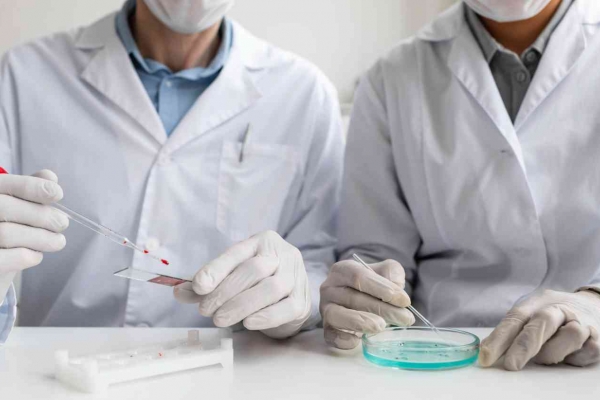
What Tests Determine If You Can Still Use Your Own Eggs for IVF at 44?
Now we arrive at one of the most empowering parts of this journey: testing. Rather than guessing about your fertility, you can gather real data about your body.
Key Assessments: Ovarian Reserve Testing
Ovarian reserve testing is the medical term for evaluating how many eggs you have left and how your ovaries are likely to respond to stimulation medications. There are three primary tests:
1. AMH (Anti-Müllerian Hormone): This blood test measures a hormone produced by your ovarian follicles. AMH levels remain stable throughout your menstrual cycle, making it a reliable indicator of your remaining egg supply.
2. FSH (Follicle-Stimulating Hormone): This blood test is typically done on day 2 or 3 of your menstrual cycle. Higher FSH levels suggest that your ovaries need more stimulation to produce eggs, which often indicates lower ovarian reserve.
3. AFC (Antral Follicle Count): This ultrasound measures the number of small follicles visible in your ovaries. Each follicle contains an egg. A higher count generally means a better response to IVF medications.
These tests do not guarantee pregnancy, but they provide invaluable insight. If your results are strong for your age, you may have a real chance to cross the age limit for IVF with own eggs.
Live Birth Rate per Age Group
According to the Society for Assisted Reproductive Technology (SART) 2024 National Summary Report, for women using their own eggs, the live birth rate per intended egg retrieval is:
|
Age Group |
Number of Cycle Starts |
Live Birth Rate |
Singleton Rate |
|
< 35 |
54,005 |
41.7% |
40.7% |
|
35–37 |
37,881 |
29.6% |
28.9% |
|
38–40 |
37,192 |
18.5% |
17.9% |
|
41–42 |
19,149 |
8.8% |
8.6% |
|
> 42 |
14,307 |
2.8% |
2.7% |
For comparison, if a woman under 35 has roughly a 4 in 10 chance per cycle, a woman aged 41-42 has about a 1 in 11 chance. Yes, the numbers decline with age. However, even an 8.8% or 18.5% chance is not zero.
Many women in their early 40s do conceive with their own eggs, especially when they have favorable ovarian reserve testing and work with experienced clinics. The key is to have realistic expectations while staying hopeful.
Live birth rate per age group statistics are population averages, not individual predictions. Your personal odds may be higher or lower depending on your unique health profile and the number of embryo transfer cycles you complete.
FAQs
3 Failed IVF Cycles: What Next?
If you have experienced 3 failed IVF cycles, you may feel exhausted, discouraged, or unsure of what to do next. First, know that you are not alone. When three cycles do not succeed, fertility specialists typically recommend deeper diagnostic testing (PGT-A, ERA Test, or Uterine imaging) to identify hidden issues.
Common causes of repeated failure include poor egg quality, chromosomal abnormalities, embryo development problems, thin uterine lining, or immune-related factors.
How do I get pregnant at 40?
Pregnancy at 40 is possible with a more intentional plan. Start with a preconception checkup, including AMH and ovarian reserve testing. Improve lifestyle, diet, sleep, and consider supplements (with doctor approval). Track ovulation closely. If no success after 6 months, consult a fertility specialist for IUI, IVF, or personalized guidance.
Is there an age limit for IVF with own eggs for a 47-year-old woman?
No legal age limit exists, but it is rare. Most clinics will not offer own-egg IVF at age 47 because the live birth rate falls below 5% in most studies. However, exceptional cases do exist, particularly for women with unusually high ovarian reserve for their age.
Conclusion
The age limit for IVF with own eggs should be viewed as a flexible guideline shaped by clinical data and individual ovarian health. While many fertility centers reference a general range, age alone does not determine eligibility or success, especially for an IVF older woman seeking personalized care.
By completing ovarian reserve testing and consulting a fertility specialist, you can gain clear insight into your own reproductive potential. With individualized evaluation and tailored treatment plans, the age limit for IVF with own eggs is often more adaptable than many realize, allowing you to explore realistic, informed options for your fertility journey.