
 ENGLISH
 中文
中文 ไทย
ไทยHow Is Your IVF Stimulation Protocol Decided? What the 2026 ESHRE Guidelines Mean for You?
In 2026, the European Society of Human Reproduction and Embryology (ESHRE) released its updated ovarian-stimulation guidance, featuring 121 recommendations covering pre-treatment assessment all the way through luteal support.
This article highlights key updates that shape your IVF stimulation plan, and what they mean for patients.
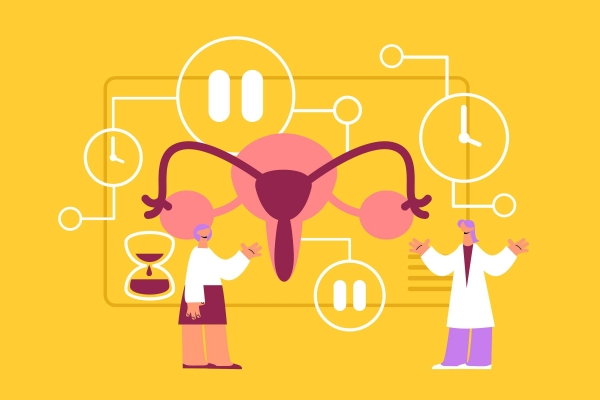
How Doctors Predict Your Ovarian Response
Planning stimulation starts with estimating how your ovaries will react to medication. A low response may produce too few eggs. An exaggerated high response raises your risk of ovarian hyperstimulation syndrome (OHSS).
ESHRE strongly recommends using anti-Müllerian hormone (AMH) or antral follicle count (AFC) to forecast ovarian response.
1. AMH: a simple blood test reflecting how many usable follicles remain in your ovaries.
2. AFC: an ultrasound count of small antral follicles, checked early in your menstrual cycle.
Both tests answer the same practical question: how many follicles are likely to respond to fertility medication.
What this means for you
If you complete pre-IVF testing, pay close attention to your AMH and AFC results. People with high AMH (common in PCOS) usually start on a lower drug dose to avoid over-stimulation. Low AMH may trigger adjustments to your protocol or starting dose.
AMH Does Not Predict Whether You Will Get Pregnant
ESHRE guidance stresses that ovarian-reserve tests including AMH, AFC and basal FSH should not be used to predict your odds of pregnancy or live birth. Your age and BMI remain key markers for forecasting pregnancy and live-birth chances.
This critical update is often overlooked by patients. Low AMH may require protocol or dose changes, but it does not automatically mean poor pregnancy odds.
What this means for you
Do not view a low AMH reading as a sign your IVF will likely fail. AMH shapes your medication plan, while age and weight drive pregnancy chance predictions.
Pre Treatment Medications: What Has Changed
Many patients get prescribed pills before stimulation to regulate their cycle or align treatment timelines. ESHRE sets clear new guidance for these pre treatments.
1. Oral contraceptives: Not recommended before antagonist-protocol cycles (FSH-only stimulation), as they may lower treatment effectiveness. If you take birth-control pills purely for cycle-scheduling, stop them at least five days before starting stimulation.
2. Estrogen: Not recommended as pre-treatment in antagonist cycles to improve IVF results.
3. Progesterone: Not advised to boost pregnancy outcomes, but acceptable if you only need it for cycle-timing purposes.
What this means for you
If your provider suggests birth-control pills or estrogen before your stimulation cycle, ask about the goal. Scheduling convenience is a valid reason; but these medications will not raise your success rates.
The Term “Mild Stimulation” Is No Longer Used
The ESHRE guideline development group removed the concept of “mild stimulation” from updated guidance.
This is not because mild-dose approaches do not work. Rather, there is no universal agreed-upon definition for the phrase.
Different studies defined it in conflicting ways: low dose drugs, capping egg numbers, or using oral medications. Without consistent definitions, researchers cannot compare results to build solid evidence-based advice.
The guideline defines standard gonadotropin dosing as 150-225 IU per day. It also promotes neutral descriptive terms: “low responder”, “normal responder”, “high responder”. This replaces the older term “poor responder”, which carried negative prognostic connotations.
What this means for you
If you hear “mild stimulation” in consultation, ask for exact drug names and daily doses. Your treatment plan should be described with concrete numbers and medications, not vague category labels.
Protocol Choices by Predicted Ovarian Response
ESHRE gives targeted recommendations based on expected ovarian response:
1. High responders (e.g., PCOS patients): GnRH antagonist protocol is strongly preferred. A lower starting dose of 100-150 IU helps cut OHSS risk. The antagonist protocol’s proven safety against OHSS drives this strong recommendation.
2. Normal responders: Stick to standard 150-225 IU per-day dosing; no dose increase or reduction is needed.
3. Low responders: Daily doses higher than 300 IU are not recommended. Higher medication doses have not been shown to improve IVF outcomes.
What this means for you:
If you are predicted to be a high responder, confirm with your doctor whether you will use an antagonist protocol plus a reduced starting dose.
If you fall into the low responder group, understand that simply cranking up medication doses is not the solution; your care team will explore other strategies.
What this means for you? A Clear list
|
Your question |
What the guideline says |
|
How is my stimulation protocol decided? |
AMH and AFC are core tests to predict ovarian response |
|
Does low AMH mean low pregnancy odds? |
AMH cannot forecast pregnancy; age and BMI are key factors |
|
Should I take birth control before stimulation? |
Not recommended for antagonist cycles; may reduce effectiveness |
|
Is “mild stimulation” right for me? |
This term is no longer formally used; ask for specific drugs and doses |
|
How should high responders choose a protocol? |
GnRH antagonist protocol is the preferred option |
The Bottom Line
The 2026-referenced ESHRE ovarian-stimulation guideline pushes IVF care toward more precise, evidence-driven decisions.
AMH and AFC estimate how ovaries react to drugs; age and BMI help gauge pregnancy chances; different predicted response types call for matching protocols and doses.
Understanding these principles will help you hold more productive conversations with your fertility provider before you start ovarian stimulation.
Have questions about IVF stimulation protocols tailored to your situation? Connect with the CEF fertility team. Email info@cefivf.com or visit our Contact page.
Disclaimer: This educational summary draws from the late-2025 ESHRE ovarian-stimulation guideline update, widely referenced in 2026 clinical resources.
Guideline recommendations provide general evidence-based direction and do not replace personalised medical judgement. Always work with your licensed fertility specialist to build your individual IVF treatment plan.